.
Vol 26, No 17 · June 26, 2026
The_Ledger
Beeble Builds a Developer Tier, Kling Rewrites Its Takedowns, A Creature Emerges
The Notice
What changed in AI platform agreements this week
We are tracking over 60 companies and 280 policy documents daily - and growing. Things that govern how your data is handled, who owns what and who’s on the hook when something goes wrong. These are things you should be reading, but don't have the time for - plus they are super confusing.
If something truly concerns you, reach out to a lawyer - there are no guarantees we catch all changes, something vital to you may be missed or misinterpreted. Docs are diff'ed and summarized by multiple LLMs, then researched, edited and published by a non-lawyer human.


Across 2026, the same thing keeps happening to AI startups: one lightweight set of terms grows into three or four. Consumer, developer, enterprise, and desktop each end up with their own document, because the company is no longer running a single web app. Beeble is this week’s instance. On June 22, 2026, it revised its Terms of Use, lightly revised its Privacy Policy, and published a standalone API Terms of Use for the first time. The developer tier absorbs almost all of the new heft: binding arbitration, a forced attribution badge, a doubled liability window, and a prepaid credit system, plus two new clauses fencing AI training. Ordinary users see little change (for now).
In human terms If you are just using the web application, very little changes. If you are integrating Beeble into your own product, this release is much more consequential: any client-facing tool that shows Beeble output now has to carry a visible “Powered by SwitchX” or “Powered by Beeble” badge in the main interface. A dispute with Beeble over the API goes to private individual arbitration instead of a courtroom, unless someone files an opt-out notice in the first thirty days. And footage-derived data lingers longer, since the deletion windows roughly doubled. None of this stops the work. It changes the terms under which the work happens, and it asks the integrator to make decisions in the first month of use that are easy to miss.
Why this matters The maturation has teeth. As these documents grow they add obligations and shift risk. The attribution mandate is more than cosmetic. It now operates as a product requirement, and if you embed Beeble into your own app, your UI has to be designed around someone else’s branding. The arbitration clause removes a court remedy that ordinary app users keep, since the consumer Terms and the desktop license both stay in court. The liability lookback doubling and longer retention windows both increase the amount of time covered by these provisions. Neither change is dramatic in isolation, but together they point toward a more mature operational model. The legal paperwork is often a leading indicator. It shifts before the roadmap is public, so reading it closely is how you can spot direction early.
Note: Beeble currently has two conflicting live versions of its API Terms, and it is unclear which arbitration regime governs. This entry quotes the June 22 PDF. See the arbitration mechanic. Continues for the details:

Kling's Takedown Path Now Cuts Both Ways
Worth Knowing

Kling’s takedown process used to be about copyright. Now it reaches a lot further, but it's not that simple. The complaint section, renamed from “Copyright Complaint” to “Infringement Complaint,” now takes claims over trademark, portrait rights, reputation, and privacy, so someone whose face or voice gets used can finally act even when they hold no copyright. That is a real gap closed.
The obvious catch is what a takedown can actually touch. Kling can remove the copy it hosts and suspend the account behind it. It cannot reach a file that has already been downloaded, shipped to a client, or recreated by another user, and Kling’s own terms (4.8) say content can be downloaded and remade by others. The new power is both broad and shallow at once. More grounds to report, and the reach still stops at the copy on Kling’s servers. But it stops there.
In human terms If someone uses your face or your voice, you can now report it even though you never held a copyright on your own likeness. If a complaint names your work, Kling can pull it and the creator "offline" while it investigates, so an innocent creator can lose access on an unproven claim. But here is the limit that matters most: a takedown only reaches the copy Kling hosts. Once the video has been downloaded, handed to a client, or rebuilt by someone else, pulling it from Kling changes nothing about the copies already out in the world.
Why this matters The likeness expansion is the signal worth tracking. A platform writing portrait and reputation rights into its complaint intake shows where the liability pressure on AI video is landing, even if few individual creators ever file such a claim. The sharper lesson is about reach. Platform takedown governs the platform. It can unpublish the hosted copy and close the account, and on the DMCA path a counter-notice can put even that copy back. What it cannot do is follow the file. The deliverable is portable, the creator owns it, and once it leaves Kling the takedown is a step behind it. That gap, between controlling a hosted copy and controlling a file already in the wild, is exactly the gap that durable, file-level provenance is meant to close. Mechanics follow below:
Suno Names an EU and UK Data-Protection Representative
Worth Knowing

Suno now has a name and an address to point European regulators to. Its Privacy Policy, updated June 23, 2026, adds a Data Protection Representatives section appointing VeraSafe as its Article 27 representative for the European Union and the United Kingdom, with offices in Cork and London. Nothing else about how Suno collects or uses data changed this cycle.
In human terms If you make music on Suno from inside the EU or the UK, you now have a named local contact for data-protection questions, a representative firm called VeraSafe with offices in Cork and London. For everyone else, nothing about how Suno collects or uses your data changed this cycle.
Why this matters Appointing an Article 27 representative is a compliance formality, and we are not calling it more than that. It is worth a line because it fits the same regional-compliance buildout we have tracked elsewhere this year, where AI platforms add jurisdiction-specific infrastructure as they grow into regulated markets. It signals Suno is formalizing its EU and UK posture. The data handling itself did not change, so the practical effect for most users is small.
The Mechanics
- New Data Protection Representatives section (Privacy Policy). BEFORE: No such section. The Last Modified date read “March 26, 2026.” AFTER: A new section appears: “VeraSafe has been appointed as Suno’s representative for data protection matters in the European Union and the United Kingdom, pursuant to Article 27 of the EU General Data Protection Regulation and Article 27 of the UK General Data Protection Regulation, respectively”. Contact addresses for VeraSafe Ireland Ltd. (Cork) and VeraSafe United Kingdom Ltd. (London) and a web contact form follow. The date now reads “June 23, 2026.”

Vol26, Issue 17 Smaller Changes
The Rest
 N8N Privacy Policy
 Last Updated bumped from 28 April to 24 June 2026 with an identical body. Watch line: a date move with no text change sometimes precedes a real edit.
 Runway Privacy Policy, ToS, Enterprise Terms
 Promotional banner swapped from a discount code to an “Agent 2.0” offer.
 Higgsfield Ai Privacy Policy, Terms of Use
 A promotional “Enhanced Seedance 2.0” modal was captured; the only body movement was whitespace in clause 9.1.
 Meta Privacy Policy, Terms of Service, Meta AI Terms, and others
 Redirect-token churn in footer links and login-button casing.
 OpenAI Enterprise Policy, How We Use Your Data, and others
 Language-selector list reordered.
 Ideogram Terms of Service, Usage Policy
 An embedded sales-contact form was reworded; the terms and policy text are unchanged.
The Exhibit
One prompt. Multiple platforms. Let's give notes.
Bringing decades of experience in feature film, episodic, and commercial production, we evaluate every output against what matters: does it meet the bar for professional use? Think of it as a dailies review for one-shot prompts.
Creature Reveal Through Water
Fitness Test
Prompt Tested
Ultra-photorealistic aerial cinematic photograph captured from a camera positioned hundreds of feet above a military rescue helicopter, looking steeply downward toward the North Atlantic Ocean from an almost top-down perspective. The helicopter is hovering approximately 600–800 feet above the violent ocean and is positioned slightly left of center directly beneath the camera. Bright navigation lights and flashing anti-collision strobe lights are clearly visible against the dark storm. A powerful searchlight projects a broad, soft beam onto the ocean below, illuminating the sea monster, dense sea spray and thick fog. The beam naturally diffuses through the moisture-filled air, creating realistic atmospheric scattering rather than a hard-edged spotlight. Far below, an enormous ancient sea creature emerges from the ocean. Only its terrifying head and upper neck rise above the surface. The creature has believable biological anatomy, wet textured skin, scars, barnacles, subtle algae growth, realistic eyes, enormous teeth and authentic marine coloration. It looks like an undiscovered deep-ocean apex predator rather than a fantasy monster. The North Atlantic is extremely violent with massive storm swells, breaking waves and heavy whitecaps. Thick white foam covers the tops of countless waves exactly like a real storm at sea. Powerful winds tear spray from every whitecap, filling the air with fine mist. Large waves crash against one another, creating chaotic foam patterns and turbulent water. The helicopter rotor wash subtly disturbs the ocean surface directly beneath the aircraft while remaining physically realistic. Heavy volumetric fog drifts across the ocean, illuminated by the helicopter searchlight and natural overcast daylight. The fog, sea spray and airborne mist create dramatic atmospheric depth. Extreme sense of scale. The helicopter appears tiny compared to the colossal creature. Ocean occupies almost the entire frame. IMAX nature documentary cinematography. National Geographic realism. Ultra-photorealistic. Feature-film VFX quality. Physically accurate ocean simulation. Physically based lighting. High dynamic range. Natural cinematic color grading. Ultra-sharp details. Authentic aerial photography. 8K. No CGI appearance. No fantasy art style. No illustration. No cartoon styling.
Creature Reveal Under Environmental Occlusion
This test measures whether a model can maintain a coherent creature design, believable scale, and consistent spatial relationship while revealing a massive sea creature through heavy environmental effects (dark water, spray, mist, searchlights, and turbulent ocean). It also evaluates cinematic staging and whether the reveal escalates naturally rather than collapsing into disconnected spectacle or losing the subject within the FX.
Seedance2.0
Maintains the most consistent integration of creature animation, ocean simulation, atmospheric effects, and camera work across the full sequence. Water carries convincing mass and momentum, producing the most production-ready result in this comparison.
Production Readiness:
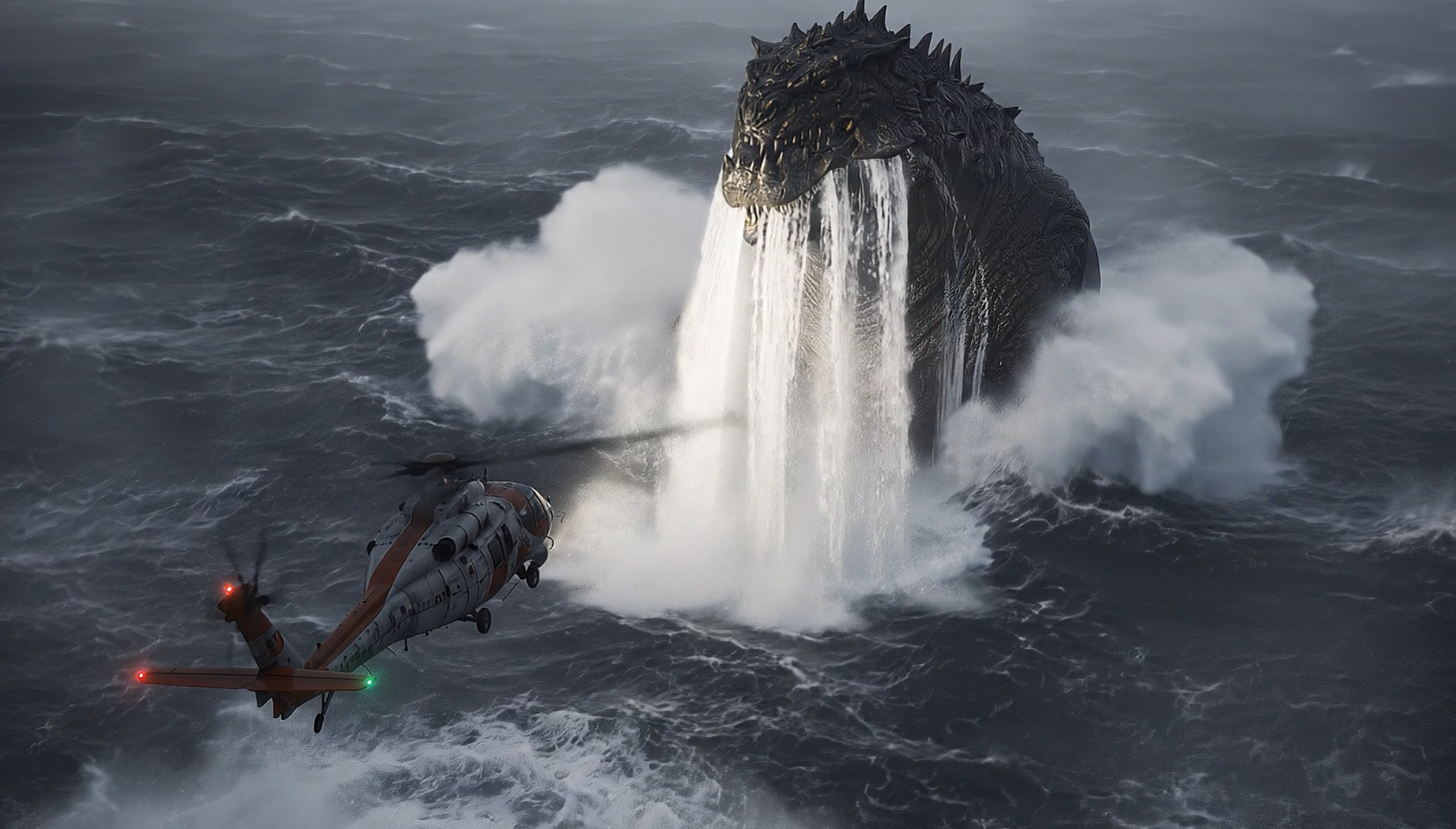
Veo3.1
Delivers excellent large-scale ocean behavior and maintains creature scale and spatial continuity throughout the reveal. Minor stylization in the finer water detail is outweighed by consistently strong shot execution.
Production Readiness:
Sora2
Produces several visually striking angles with strong lighting and cinematic composition. Water interaction and spatial continuity become less consistent as the sequence progresses. Water simulation has unrealistic repetitions lacking convincing water <→ water interaction. Creature gets worse as it exits water. Giving it a yellow this week as we should be nice to a EOL model.
Production Readiness:
Wan2.2
Maintains stable compositions and coherent environmental effects throughout the sequence. Ocean dynamics lack the complexity and force expected at this scale, resulting in a competent but conservative presentation.
Production Readiness:
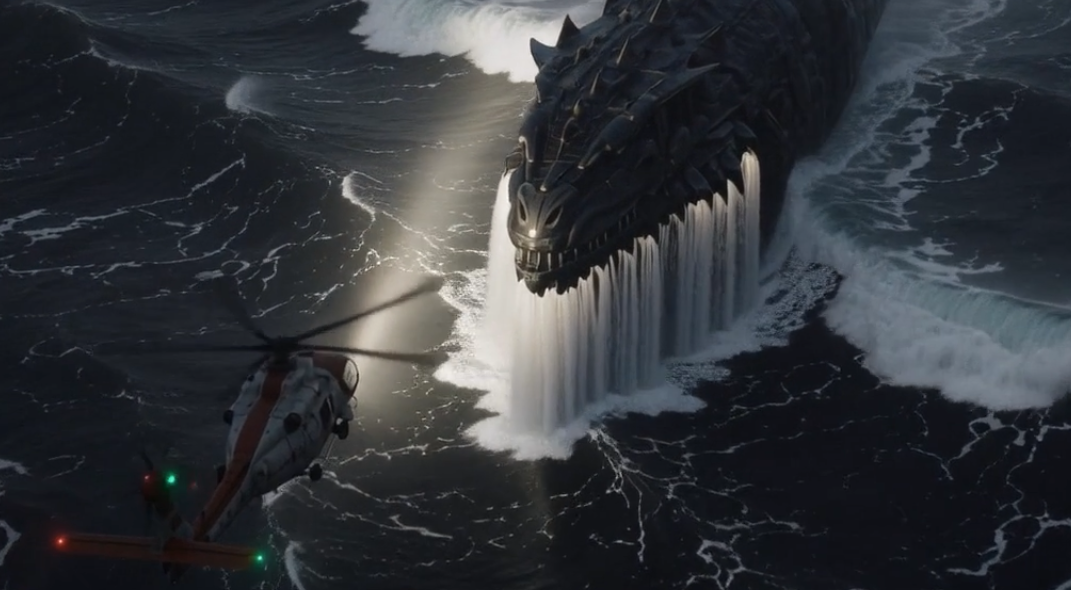
LTX2.3
Establishes convincing broad-scale motion and a readable creature reveal, but water simulation loses detail under close inspection while being too consistent as falling from mouth. Foam, spray, and secondary fluid motion remain the most obvious areas requiring additional visual effects work.
Production Readiness:
Kling2.1Pro
Water effects frequently obscure the creature rather than reinforcing its scale, reducing the impact of the reveal. Environmental interaction, fluid behavior, and overall shot readability fall short of the standard established by the leading models.
Production Readiness:
The Verdict
Results: All six models produce imagery that would have been remarkable only a few years ago. Seedance and Veo deliver the most complete shots, maintaining convincing creature performance, water interaction, atmospheric effects, and a consistent sense of scale throughout the reveal. The remaining models show varying degrees of breakdown in fluid behavior, environmental integration, or shot continuity. Graded against the best in class modern VFX, none of these results would survive, but still quite impressive results in places.